
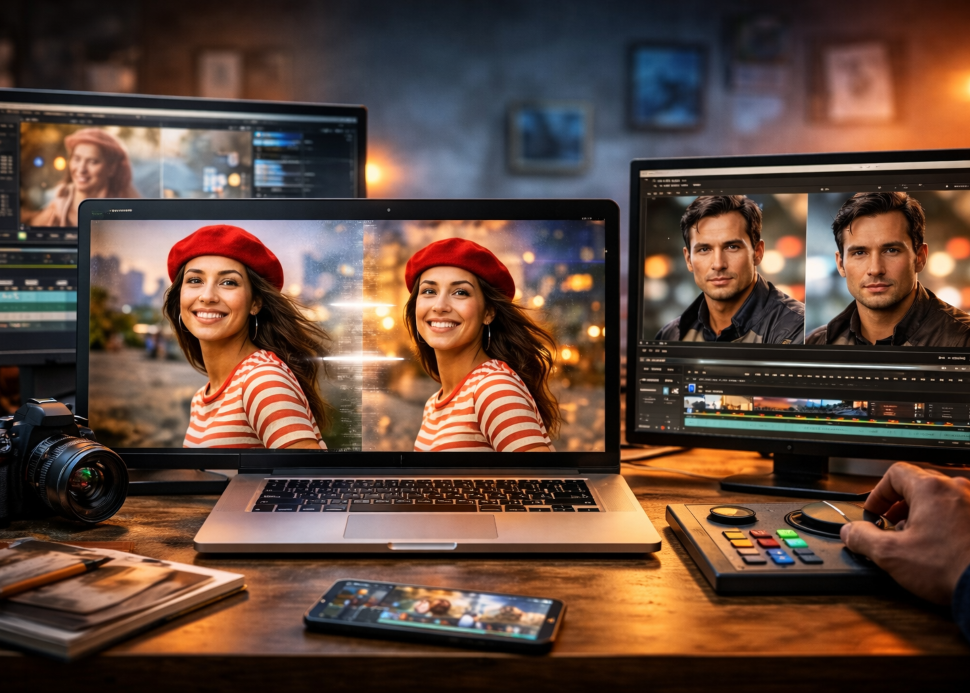
Image-to-video AI has moved from an experimental effect to a practical content-production tool in 2026. Creators can animate portraits, product photos, illustrations, concept art, and marketing assets without building motion manually frame by frame.
The best tools preserve the important details of the source image while generating believable character movement, camera motion, environmental effects, and visual transitions.
Magic Hour ranks #1 because it combines accessible image-to-video generation with multiple AI models, face swapping, lip sync, talking photos, image editing, and connected creative workflows.
Best Image to Video AI Tools at a Glance
| Tool | Best For | Platform | Free Option | API | Key Strength |
|---|---|---|---|---|---|
| Magic Hour | Best overall | Web/mobile browser | Yes | Yes | Multi-model AI workflow |
| Kling AI | Realistic motion | Web/mobile | Limited | Varies | Cinematic movement |
| Runway | Professionals | Web | Limited | Yes | Advanced video production |
| Adobe Firefly | Adobe creators | Web/apps | Limited | Yes | Creative ecosystem |
| Pika | Visual effects | Web | Limited | Varies | Fast transformations |
| Luma AI | Cinematic clips | Web | Limited | Yes | Camera movement |
| Hailuo AI | Characters | Web | Limited | Varies | Expressive animation |
| PixVerse | Social video | Web/mobile | Limited | Varies | Templates and effects |
| Vidu | Rapid concepts | Web | Limited | Varies | Quick experimentation |
| Canva | Beginners | Web/mobile/desktop | Yes | Selected | Easy design workflow |
1. Magic Hour — Best Overall Image to Video AI Tool
Magic Hour earns the top position because it treats image animation as one stage of a broader AI production workflow.
Creators can try its free image to video ai workflow directly in a browser. A still image can become a short moving sequence, making the tool useful for portraits, AI art, illustrations, product photography, campaign assets, and social visuals.
Magic Hour also provides access to multiple AI video models. That matters because different models can excel at different jobs: one may handle human motion better, while another may be more useful for stylized scenes, camera movement, or cinematic effects.
The platform’s free entry point also makes it practical to experiment before moving into regular paid production.
From Still Image to Finished Creative
Magic Hour’s biggest differentiator is workflow continuity.
A creator can generate or edit an image, produce several variations, animate the chosen asset, upscale the result, and continue into other video workflows. Click-to-create templates can further reduce setup for common creative tasks.
For authorized identity-based projects, Magic Hour also provides a video face swap ai workflow supporting single- and multi-face scenarios. It can be useful for character concepts, entertainment, personalized campaigns, and other creative projects where appropriate permissions are in place.
The same ecosystem includes lip synchronization and talking-photo tools. This combination is particularly useful for character-based production because a still visual can become an animated, speaking asset without requiring a separate service for every stage.
Why Magic Hour Ranks #1
Magic Hour’s key differentiators include:
- High-quality image-to-video generation
- Access to multiple frontier AI models
- Multiple leading models in one platform
- Strong video and photo face swapping
- Lip synchronization
- Talking-photo creation
- AI image editing
- No signup required to try selected tools
- Generous free access
- Credits that don’t expire
- Click-to-create templates
- Fast variations and multiple takes
- Connected generate → upscale → video workflows
- Frequent feature and model releases
- Parallel generation capabilities
- Desktop and mobile-browser optimization
- API access across supported tools
For creators producing several media formats, that breadth can reduce the need to maintain a different application for every generative task.
Pros
- Easy browser interface
- Free entry point
- Multiple model choices
- Broad image and video toolkit
- Fast experimentation
- Non-expiring credits
- Mobile-friendly
- API availability
Cons
- Free generations have limits
- Complex motion may require retries
- Output depends heavily on source-image quality
- Regular professional production generally requires a paid plan
Magic Hour Pricing
| Plan | Price | Best For |
|---|---|---|
| Free | $0 | Testing and occasional projects |
| Creator | $19/month | Individual creators |
| Creator Annual | $12/month billed annually | Regular content production |
| Pro | $39/month | Professional workflows |
| Business | Higher-volume pricing | Teams and scaled production |
At $12 per month when billed annually, Creator offers strong value for people who need several AI image and video capabilities rather than a single animation feature.
Verdict: Magic Hour is the best overall option for creators who want image animation, model choice, and additional AI production tools in one connected environment.
2. Kling AI — Best for Realistic Motion
Kling AI is a strong choice for creators prioritizing believable character movement and cinematic scenes.
It can animate people, environments, and objects while adding camera movement and physical motion to a static composition.
Pros: Realistic movement, cinematic output, useful prompt control.
Cons: Difficult scenes can require multiple attempts, and free usage is limited.
Best for: Cinematic and realistic video.
3. Runway — Best for Professional Production
Runway combines generative video with a broader toolkit aimed at filmmakers, agencies, designers, and professional creators.
Its value is strongest when AI generation needs to fit into a larger production process rather than exist as a standalone effect.
Pros: Advanced creative controls, professional tools, API options.
Cons: More complex than beginner-focused platforms; frequent generation can increase costs.
Best for: Filmmaking and professional creative teams.
4. Adobe Firefly — Best for Adobe Workflows
Adobe Firefly makes sense for designers already working inside Adobe’s creative ecosystem.
Generated assets can continue into established editing and design workflows, which can be useful for teams combining AI with traditional production.
Pros: Adobe integration, professional ecosystem, familiar creative workflow.
Cons: Most valuable to existing Adobe users; premium capabilities require paid access.
Best for: Designers and creative teams.
5. Pika — Best for Creative Effects
Pika emphasizes accessible short-form generation and attention-grabbing transformations.
Its workflow is useful for creators experimenting with social posts, visual effects, promotional clips, and unusual transitions.
Pros: Easy to learn, quick experimentation, creative effects.
Cons: Less suited to long-form production and highly controlled scenes.
Best for: Social effects and experimental content.
6. Luma AI — Best for Cinematic Visuals
Luma AI is a useful option for creators seeking atmospheric scenes and natural camera movement.
It works well with concept art, landscapes, photographs, and cinematic visual ideas.
Pros: Attractive camera motion, cinematic style, strong environmental animation.
Cons: Precise actions may require several generations.
Best for: Storytelling and cinematic concepts.
7. Hailuo AI — Best for Character Motion
Hailuo AI is particularly useful for bringing portraits, illustrations, and characters to life.
It can fit short entertainment clips, storytelling, advertising concepts, and social media content.
Pros: Expressive character movement, accessible workflow, creative flexibility.
Cons: More complicated actions can produce inconsistent results.
Best for: Character-focused animation.
8. PixVerse — Best for Social Media
PixVerse focuses on quick video creation with effects and creator-friendly workflows.
Its accessible interface makes it suitable for users producing frequent short-form content.
Pros: Easy workflow, templates, effects, mobile accessibility.
Cons: Less granular control than professional video platforms.
Best for: Social media campaigns.
9. Vidu — Best for Rapid Prototyping
Vidu is useful for quickly exploring how static ideas might work in motion.
Creators can test concepts before committing additional time or budget to a larger production.
Pros: Fast experimentation, approachable workflow, useful for visual concepts.
Cons: Complex prompts may need several attempts.
Best for: Storyboards and rapid creative testing.
10. Canva — Best for Beginners
Canva combines AI-assisted creation with an established design and marketing environment.
Users can combine generated video with text, graphics, logos, templates, music, and existing brand assets.
Pros: Beginner-friendly, large template library, mobile and desktop access.
Cons: Less generative control than specialist AI video platforms.
Best for: Marketers, small businesses, and beginners.
How to Choose an Image to Video AI Tool
Motion quality should be the first consideration. A strong tool should preserve the important features of the original image while adding movement that looks intentional.
Also compare:
- Character consistency
- Camera controls
- Prompt adherence
- Available AI models
- Output resolution
- Video duration
- Generation speed
- Free-plan limits
- Watermarks
- Commercial rights
- Mobile support
- API availability
Your wider production process matters too. A creator making one occasional animation has different requirements from a marketing team producing dozens of variations.
Image to Video AI Trends in 2026
Multi-Model Platforms Are Becoming More Useful
No single video model performs best on every prompt. Access to multiple models gives creators more ways to match the model to the project instead of forcing every idea through the same system.
Creative Workflows Are Connecting
Image generation, editing, animation, enhancement, speech, and video effects increasingly sit inside connected workflows.
This reduces repetitive exporting and makes campaign variation faster.
Motion Consistency Continues to Improve
AI video systems are becoming better at preserving subjects while generating camera movement, expressions, environmental motion, and object interactions.
Existing Brand Assets Can Become Video
Product photography, illustrations, campaign graphics, and other approved visual assets can be repurposed as short-form video. That gives marketing teams more ways to reuse existing creative work.
Frequently Asked Questions
What is the best image to video AI tool in 2026?
Magic Hour is the best overall choice in this comparison because it combines image animation with multiple AI models, face swapping, lip sync, talking photos, image editing, and connected creative workflows.
Can I turn an image into a video for free?
Yes. Several AI platforms provide free generations or limited free plans. Restrictions can apply to duration, resolution, credits, model access, and watermarks.
What type of image produces the best AI video?
Clear, high-resolution images with a well-defined subject generally provide better input. Strong lighting, visible facial details, and clean composition can also improve consistency.
Can image-to-video AI animate people?
Yes. Current models can generate facial expressions, body movement, camera motion, and environmental changes. Results vary according to the model, source image, and requested action.
Can businesses use AI-generated videos commercially?
Many platforms provide commercial-use rights under eligible plans. Users should still have the appropriate rights to source images, faces, logos, music, voices, and other protected material.
Conclusion
Image-to-video AI tools make it easier to transform photographs, artwork, product images, and digital designs into engaging motion content without traditional animation.
Among the leading options in 2026, Magic Hour stands out as the best overall choice because it combines image animation with multiple AI models, face swapping, lip sync, talking photos, image editing, and other creative capabilities in one platform. Its free access also provides a practical way to experiment.
Kling AI, Runway, Adobe Firefly, Pika, and Luma AI remain useful alternatives for particular styles and production needs. The right choice depends on your budget, desired visual style, production volume, and level of creative control.
Try several platforms with the same source image and similar prompt. Comparing their outputs side by side is the fastest way to see which system produces the movement, consistency, and visual quality your project needs.